Warehouse management is a vital factor directly determining the profitability of any store or business, especially in today’s multi-channel sales environment. A messy warehouse and inaccurate inventory not only cause losses but also tie up tens, even hundreds of millions of your capital. This article will provide an A-Z guide to warehouse management, how to accurately manage goods, avoid losses, and optimize inventory capital.
1. What is Warehouse Management?
Warehouse Management is a process that includes controlling, monitoring, and optimizing all activities occurring in the warehouse such as inbound, outbound, arrangement, inventory, and transportation of goods. The ultimate goal is to ensure goods are managed, tracked, and controlled accurately, efficiently, and cost-effectively, in order to promptly meet production and business needs.
2. Why do business households need warehouse management?
For store owners or multi-channel businesses, inventory management plays a crucial role in business operations:
- Avoid inventory loss and discrepancies: Helps store owners accurately track the quantity of goods in stock, minimizing losses, damage, or errors in the management process.
- Ensure stock availability: Helps maintain a balance between excess and insufficient inventory. Stock-outs cause lost revenue; overstocking increases storage costs and ties up capital. Effective management helps avoid both situations.
- Optimize storage costs: Tight control helps detect and adjust inventory levels flexibly, thereby reducing unnecessary costs such as electricity, water, labor, and preservation.
- Increase business efficiency and capital management: Ensures the store always has sufficient supply, avoiding stock shortages when customers place orders. This also helps store owners plan purchases and manage capital reasonably, ensuring smooth business operations.
3. Important factors in warehouse management
To improve management efficiency, store owners need to pay attention to the following main activities:
| Activity | Goals and Important Notes |
| Warehouse Design & Layout | Develop a reasonable layout plan, arrange goods by category, SKU, bin location, or by season. Ensure safe and scientific aisles. |
| Inbound & Outbound Management | Continuously update inbound and outbound quantities. Strictly check and store documents (receipts, delivery notes). Ensure strict control of this process. |
| Inventory Count | Perform periodic inventory counts to determine actual stock levels. Establish optimal inventory levels and adjust any discrepancies. |
| Quality Management | Identify and timely handle long-stored, damaged, or expired products (FEFO), avoiding waste. |
| Physical Asset Management | Choose an appropriate storage method. Preserve inventory physically and in good quality, enhancing customer evaluation. |
| Accounting Management | Use Outbound slips, Inbound slips, Stock cards, and spreadsheets to strictly track and control inventory levels, serving to calculate Cost of Goods Sold (COGS). |
| Economic Management | Ensure a balance between Safety Objective (Sufficient stock) and Financial Objective (Minimize storage costs and capital tied up in inventory). |
See more:
- ISO warehouse management process and effective warehouse management experience
- Essential warehouse management skills for warehouse staff
4. Popular warehouse management methods today (manual vs. technology)
Warehouse management is a complex process; choosing the right method is key to saving time and effort.
4.1. Manual management with ledgers, Excel: Starting solution
- Advantages: Easy to use, low cost (free), suitable for very small business households.
- Disadvantages: Prone to errors, time-consuming inventory checks, difficult to summarize reports (profit/loss), cannot synchronize inventory when selling across multiple channels.
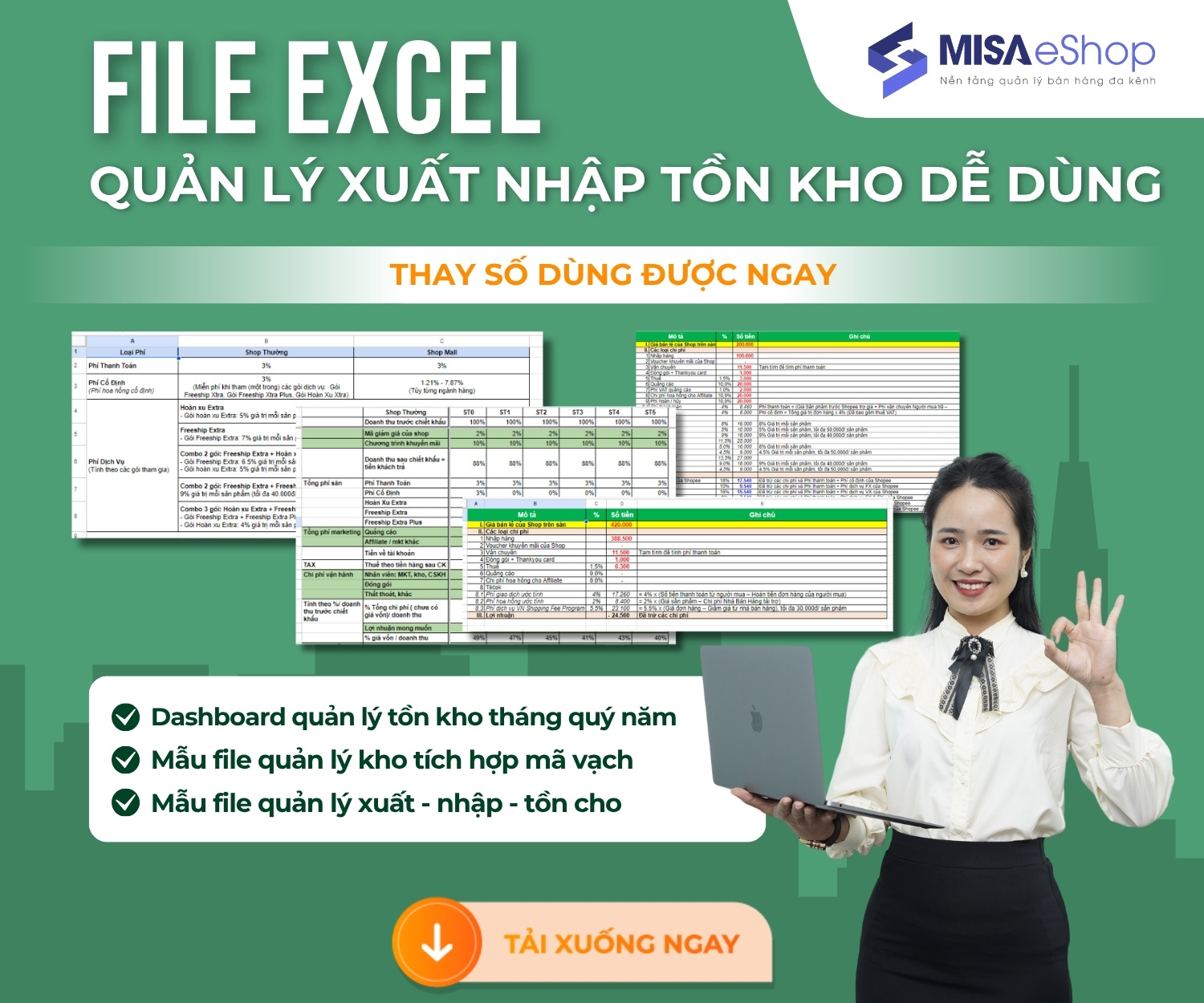
To help you control goods, calculate profit/loss, and easily track inventory at the initial stage, MISA eShop GIVES YOU A COMPLETE SET OF THE BEST EXCEL INVENTORY MANAGEMENT FILES 2025.
CLICK ON THE IMAGE BELOW NOW to receive the document!
4.2. Upgrade warehouse management with software
Currently, many businesses use sales management software integrated with inventory control features. This is an optimal solution for multi-channel sales (Shopee, TikTok Shop, Website).
- Automation: Automatically updates quantities, warns when inventory reaches a set level or is about to run out.
- Accelerate inventory: Use barcodes, IMEI codes, or serial numbers to perform quick and accurate inventory checks.
- Multi-channel synchronization: Connects directly with sales channels, ensuring actual inventory always matches inventory displayed on e-commerce platforms.
- Smart reports: Provides smart inventory reports to track and evaluate the efficiency of goods storage.
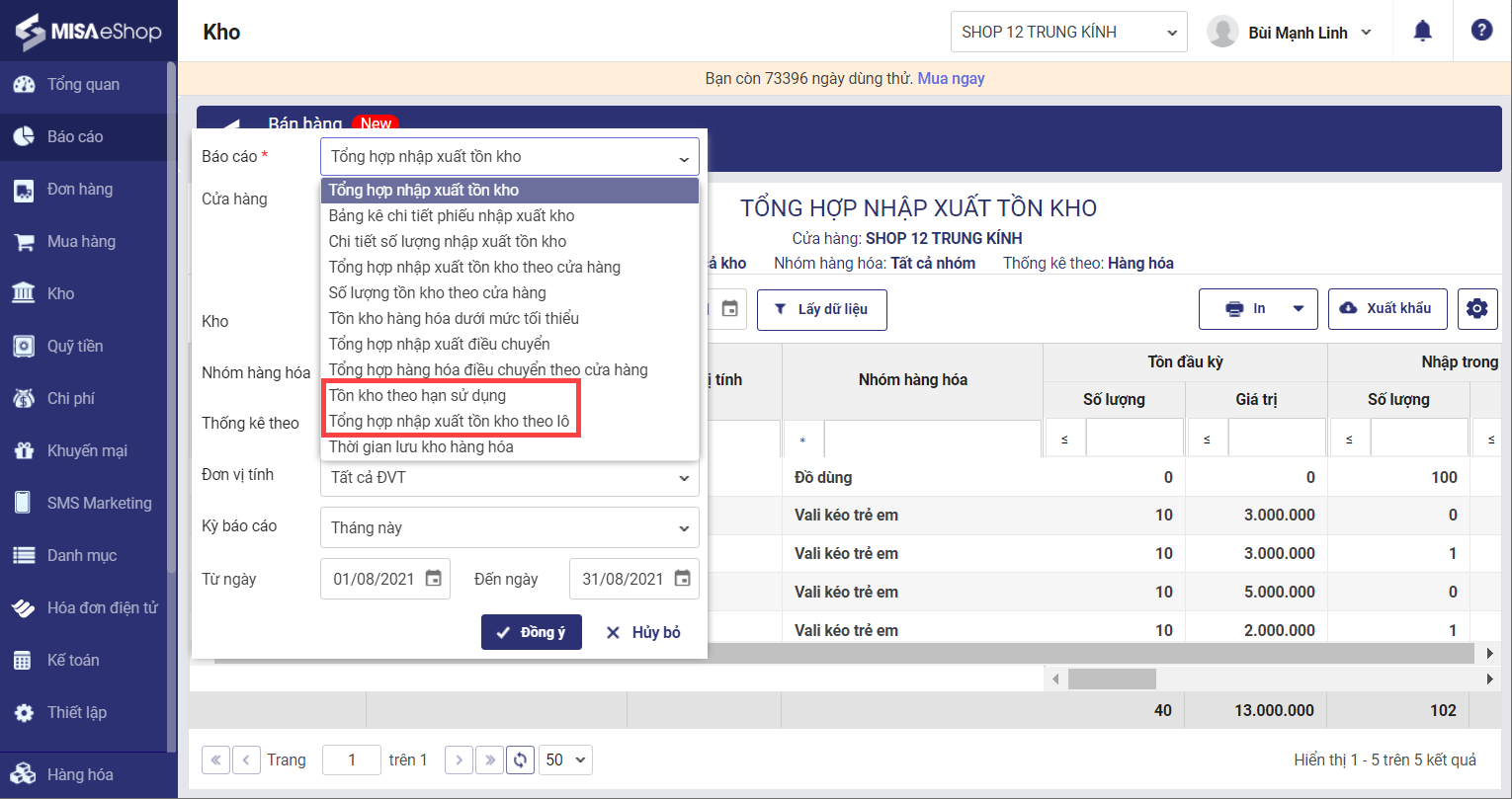
| >> Register for a free trial of MISA eShop smart warehouse management software |
5. Warehouse management models to optimize capital and costs
Applying scientific models will help businesses optimize the management process and achieve high efficiency, regardless of size.
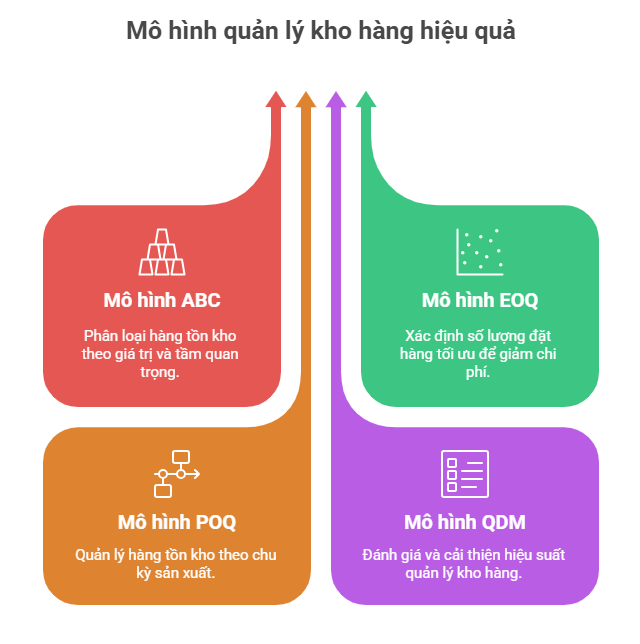
5.1. ABC warehouse management model – (Activity-Based Costing)
This model classifies inventory into three groups A, B, and C based on their value, usage volume, or profitability.
- Group A (Most important): Highest annual value (70–80% of total value), but only accounts for about 15% of the total number of inventory types.
- Group B: Annual value is at an average level (15% – 25%) compared to the total value of inventory, but in terms of quantity, they account for about 30% of the total inventory.
- Group C (Least important): Low value (about 5% of total value), but accounts for a large quantity (~55%) of the total number of inventory types.
Application: Managers focus resources and control most tightly on Group A items to maximize performance.
5.2. EOQ warehouse management model – (Economic Order Quantity)
The EOQ model helps determine the optimal quantity of goods to order at one time to minimize total inventory costs (balancing ordering costs and holding costs).
- Formula: EOQ=H2×S×D
- Advantages: Simple and easy to apply, optimize costs, ensure stable supply.
5.3. POQ warehouse management model – (Periodic Order Quantity)
The POQ (Periodic Order Quantity) inventory management model is a management method in which goods are ordered according to a fixed cycle.
In the POQ model, orders are placed at the end of each inventory management cycle, instead of ordering when inventory falls to a required level.
- Advantages: Helps simplify the management process, easy to apply, reduces ordering costs, and increases inventory management efficiency.
5.4. QDM inventory management model – (Quantity discount model)
The QDM model helps optimize inventory management processes by using digital tools and techniques to assist businesses. Through the integration of forecasting models, optimization models, chart analysis, and numerical algorithms. QDM is not only convenient for predicting goods consumption demand but also focuses on optimizing important aspects of the inventory management process.
- Advantages: Uses data and data analysis to optimize inventory management, reduce costs, and enhance flexibility, helping businesses accurately forecast and plan supply.
See more: Essential warehouse management skills for warehouse staff
6. How to optimize warehouse management with Industry 4.0 technology
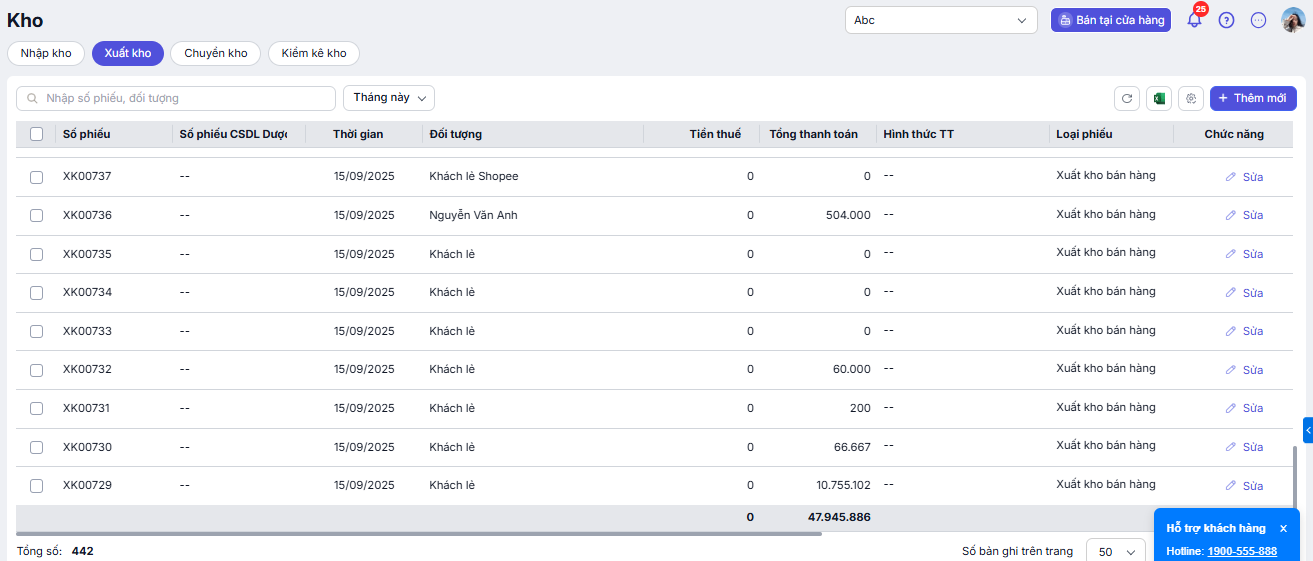 To maximize the benefits of the models and processes mentioned, applying technology is imperative:
- Systematize processes: Connect sales, accounting, and warehouse software so that all inbound/outbound/inventory data is automatically and instantly synchronized.
- Paperless inventory: Apply barcodes, QR codes so employees only need to scan codes to complete inventory slips, reducing 99% of errors caused by manual data entry.
- Manage anytime, anywhere: Track real-time inventory data, revenue, and profit right on your phone or tablet.
MISA eShop – The “6-in-1” solution for warehouse management and tax compliance
MISA eShop is not only professional warehouse management software, addressing all issues from inbound, inventory to stock, but also a “6-in-1” solution optimally designed for small business households, traders, and stores.
Outstanding features:
- Barcode-based goods management: Easily scan barcodes to track inventory quantities, inbound – outbound goods, update detailed orders.
- Flexible warehouse operation on phone: Perform picking, packing confirmation, handover to shipping units, and even re-stocking returned goods right on the mobile application.
- Automatic, accurate inventory reports: Intuitive reporting system helps you instantly grasp remaining stock, best-selling or nearly out-of-stock items to plan reasonable purchases, avoiding losses.
- Superior multi-channel synchronization: Helps instantly synchronize inventory between offline stores and e-commerce platforms (Shopee, TikTok Shop), avoiding overselling.
- Full range of operations: Includes Sales, Invoice Issuance, Tax Declaration, Digital Signature, Tax Payment through Mtax portal, Accounting Books on a single application.
- Easy tax compliance: Helps business households conveniently comply with the latest tax regulations, even if they do not have in-depth accounting knowledge.
See more creating quick inbound slips from supplier purchase invoices. Experience the process of automatic inbound invoice processing connected to Misa meInvoice application for invoice processing in the video below.
To “Accompany business households in digital transformation“, MISA is offering a program to give away 3 months of free use of MISA eShop tax declaration and sales software to 2 million business households nationwide. This is a golden opportunity for you to own a professional warehouse management and tax compliance tool without initial costs!
Register to receive 3 months of MISA eShop for free
Conclusion
Warehouse management is not just a logistical task but a core business strategy. Applying modern management methods and models will help store owners control goods, avoid losses, optimize storage costs, and ultimately increase profits sustainably.
Hopefully, with the sharing from MISA eShop above, you can completely build and implement a scientific and efficient warehouse management process. Don’t forget to see more useful knowledge about sales management and warehouse management at MISA eShop Blog so that business households can operate effectively and receive 3 months of free use of MISA eShop tax declaration and sales software right away here.